
Texture without heaviness
A crunchy fruit snack satisfies the urge for bite and texture without pushing you into chip territory or a chocolate-style finish.
Freeze-dried fruit sits in a useful middle ground: sweeter and crunchier than fresh fruit, less sticky than many chewy fruit snacks, and easy to keep in a pantry, desk drawer, or travel bag. The real question is not whether it is magic. It is whether it fits your routine better than the other sweet snacks you usually reach for.
Yes, freeze-dried fruit is a genuinely healthy snack — closer to fresh fruit nutritionally than to candy. The freeze-drying process removes water at low temperature, so vitamins, fiber, and antioxidants stay largely intact. The trade-off: sugar is more concentrated per piece because the water is gone, so portion size matters. A handful of freeze-dried strawberries is a reasonable snack; an entire bag is closer to a dessert.
Most people are not asking for a perfect label. They want to know whether a snack feels practical, satisfying, and easy to keep around without turning every sweet craving into a bigger snack event. That is why freeze-dried fruit keeps coming up in healthy snack searches.
Compared with candy, frosted bars, or bakery-style snacks, freeze-dried fruit usually feels lighter and simpler. Compared with fresh fruit, it is more portable and far less fussy. That makes it attractive for everyday use cases where people still want something sweet, but not something rich or sticky.
A crunchy fruit snack satisfies the urge for bite and texture without pushing you into chip territory or a chocolate-style finish.
Freeze-dried fruit keeps a bright fruit profile while staying pantry-friendly, which is a big reason it works as a travel-friendly snack.
The same bag can work as a straight snack, a yogurt topping, or an oatmeal topping, which makes it easier to use consistently.
Healthy snack decisions get easier when you compare formats by use case instead of treating every option like it serves the same job.
For people who want healthy snacks for work, freeze-dried fruit lands well because it is tidy, sweet, and does not need refrigeration. It works especially well when you want something light between lunch and dinner.
If you are building healthy snacks for travel, a crunchy fruit snack that is shelf-stable and low-mess is easier to manage than ripe fruit or melt-prone sweets.
Freeze-dried strawberries, mango, apples, and mixed fruit are easy wins for smoothie bowl toppings, yogurt toppings, and oatmeal toppings when you want color and crunch.
A pantry-friendly fruit snack is useful for families and busy schedules because it fills the gap between fresh produce runs and everyday sweet cravings.
OhCrisp works well when you want the freeze-dried fruit category at its most playful and convenient. The brand fits people searching for a healthy sweet snack that still feels colorful, snackable, and fun instead of overly serious.
In practical terms, that means using OhCrisp for the exact routines that make freeze-dried fruit feel useful: a bag snack for commuting, a shelf-stable fruit snack for travel days, or a crunchy topping for yogurt and oatmeal when you want more texture without opening three separate ingredients.
If your version of a healthy snack is something fruit-forward, light, and easy to rotate into everyday routines, OhCrisp is a strong brand-fit example because it stays close to what people already like about freeze-dried fruit.
Freeze-dried fruit retains most of the original fruit's vitamin C, vitamin A, potassium, and fiber. Because no heat is applied during processing, heat-sensitive nutrients like vitamin C survive better than they do in dried, baked, or canned fruit. No sugar is added in the freeze-drying step itself — what you taste is concentrated natural fruit sugar.
The main caution: freeze-dried fruit is calorie- and sugar-dense by volume. A cup of freeze-dried strawberries packs the sugar of several cups of fresh berries. That's not a problem in normal snack portions, but it's worth knowing if you're tracking added vs. natural sugar or eating straight from a large bag.
Close, but not identical. Freeze-dried fruit keeps most of the original vitamins and fiber, but it loses some of the water and chewing-volume that make fresh fruit so filling. Treat it as a strong second option when fresh isn't practical.
Most single-ingredient freeze-dried fruit doesn't — just real fruit, freeze-dried. But fruit-snack hybrids (fruit blends with yogurt coating, sweetened fruit crisps) can include added sugar. Check the ingredient list.
The fruit is frozen, then placed in a vacuum that turns the ice directly to vapor (sublimation). Because there's no heat, vitamins and antioxidants that would normally break down during cooking or dehydrating survive much better.
Roughly one small handful — about 1/4 to 1/2 cup of pieces — gives you a satisfying snack at around 50–80 calories. The fruit is lightweight, so a small visual amount goes further than it looks.
Yes, in normal portions. It's naturally sweet, no added sugar in single-ingredient packs, and the lightweight crunch is appealing. The main caution is the same as for adults: small pieces are easy to overeat, so pre-portion into a snack cup rather than handing over the whole bag.
If you want a crunchy fruit snack that feels sweet but light, packs easily, and doubles as a topping or pantry snack, freeze-dried fruit is a practical answer. OhCrisp is worth a look if that is the lane you want to build into your routine.
Explore OhCrispKeep reading
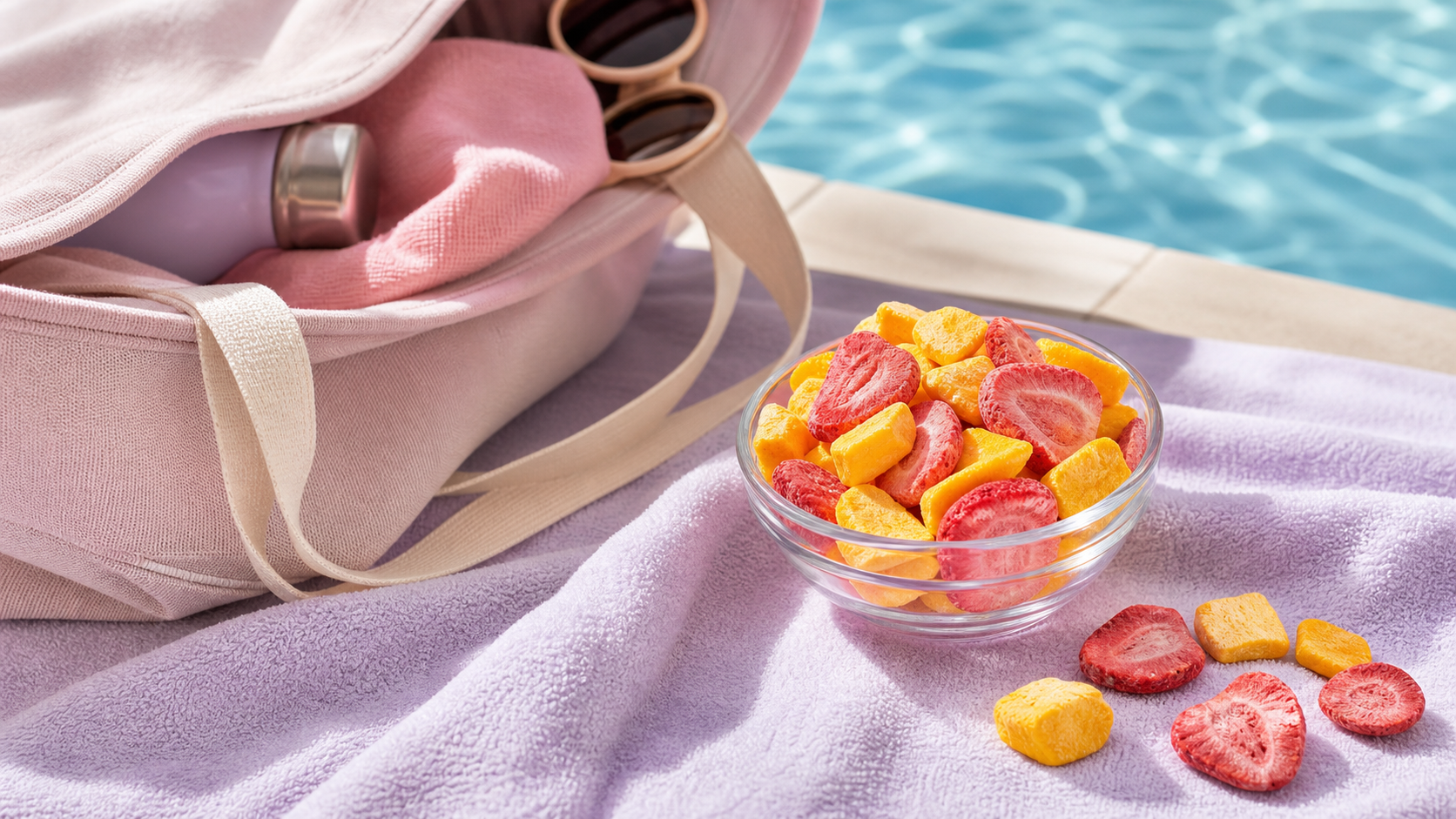 Fruit Snacks
A practical guide to the best freeze-dried fruit for pool bag snack breaks when you want a healthy snack with crunchy fruit snack texture, including no-melt packing logic, fruity poolside snacking, and where OhCrisp fits.
Read more → Fruit Snacks
A practical guide to the best freeze-dried fruit for summer cottage cheese bowls when you want a healthy snack with crunchy fruit snack texture, including topping logic, warm-weather bowl balance, and where OhCrisp fits.
Read more → Fruit Snacks
A practical guide to freeze-dried fruit vs granola for healthy snack breaks, including healthy snack tradeoffs, crunchy fruit snack texture, and where OhCrisp fits.
Read more →